

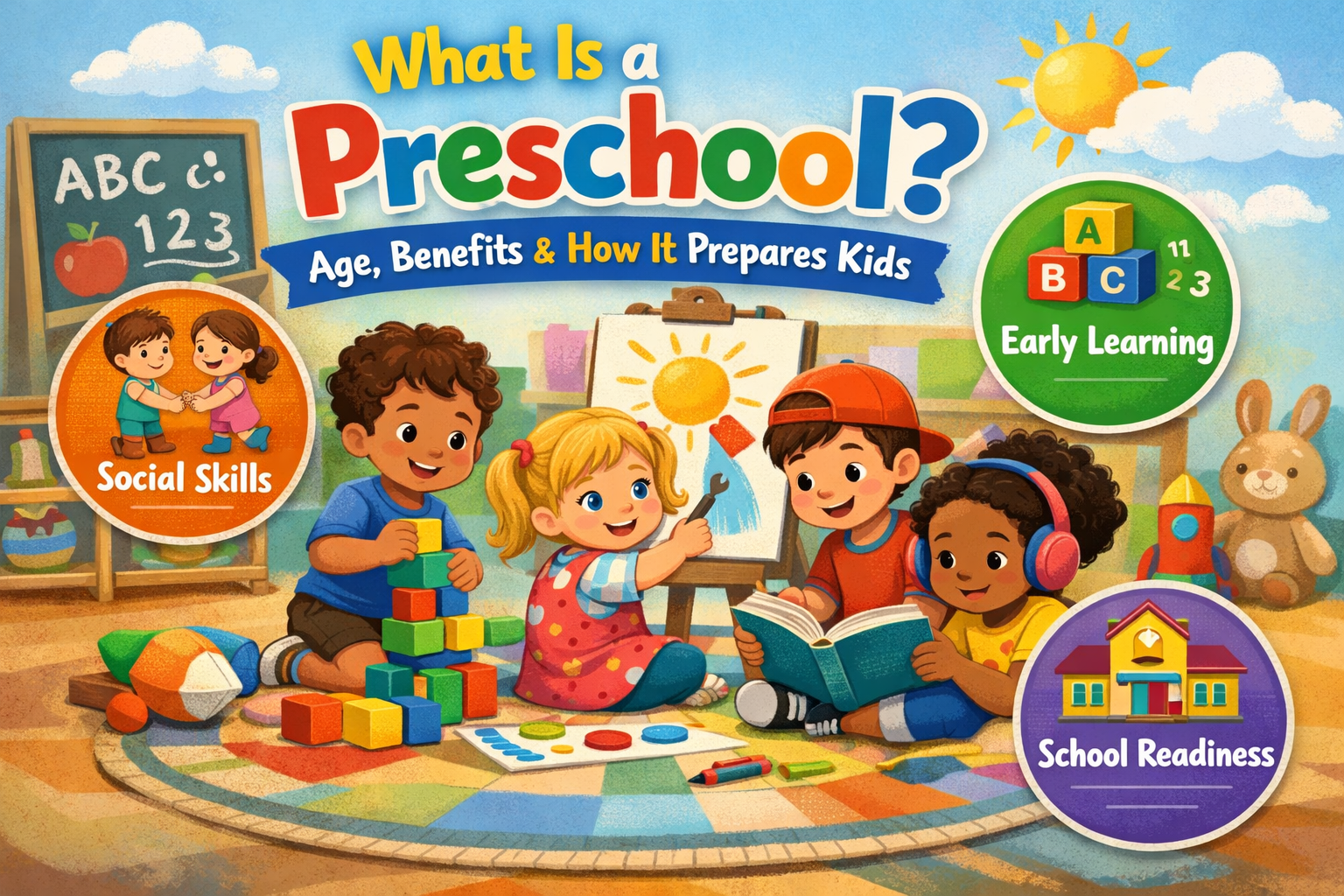
Preschool is often a child’s first formal educational experience that is outside of home and provides a base for future learning and social competencies in a child and a basis for lifelong learning. As parents we do want the best for our child at every stage in their social and emotional development , and we certainly do not want to stifle their learning opportunities. At Geekidss Preschool we understand that Early Childhood Education is much more than recreation. It is the start of a well orchestrated educational journey that promotes and nurtures the learning of individual children to foster and enhance a lifelong love for learning. In this Guide we aim to provide a complete explanation of what preschool is and how it promotes a child’s development in order to facilitate and prepare them of the responsibilities and expectations of Kindergarten.
What Is A Preschool and How Does It Work?
Preschool is a form of early childhood education that is implemented to children who are about to enter formal schooling and typically are in Kindergarten. It is often the first learning experience in a structured environment where children learn in a hands-on way through purposeful play activities, guided exploration and social interactions.
At Geekids Preschool, we have integrated developmental learning with creative play, which allows children to develop skills in a safe environment. From his teachers, he learns to overcome individual and collective challenges and to participate in concrete activities that develop his mind and heart.
What is the Preschool School Age?
Preschool is typically for children aged 2.5 to 5 years a stage when skills start to develop rapidly. Although there are differences in the age range across programs, it is common for children to start preschool a few years before they start kindergarten.
What is the Purpose of Preschool Education?
Preschool seeks to provide balanced holistic nurturing, integrated for a child, which is to promote preschool child development on:
- early literacy and numeracy skills
- socio-emotional development
- the development of curiosity and confidence
- problem-solving and communication skills
At Geekidss Preschool, we use these skills to help children be more activity ready, and we use a lot of storytelling, music, and movement.
What Are The Differences Between Preschool And Home Child Care?
While home child care provides basic supervision, preschool is designed around specific educational goals that take into account the developmental stage of the child. The differences are the following:
Feature Preschool Home Child Care
Curriculum Yes, structured No
Socialization Engagement with peers daily Minimal peer interaction
Qualified Teacher Credentials in early childhood education Not required
Routine and Activities Developmentally appropriate More flexible and care oriented
Preschool is more than just care for children. It offers early education that is tailored to build the foundation for lifelong learning.
What Are The Skills Preschool Children Learn?
Children in preschool acquire:
Social skills: Sharing, cooperation, turn taking
Language and communication: Vocabulary building, story telling, listening skills
Basic math and literacy: Recognition of patterns, shapes, letters, and numbers
Motor skills: Cutting, drawing, constructing
Emotional: Self control, empathy, and confidence
Is It Considered To Be Preschool Formal Education?
When referring to preschool, most people are talking about early childhood education, which is not the same type of education as primary school, regarded as formal schooling. Rather, preschool is structured in a way to focus on the acquisition of early education skills that are academic and life skills. It is meant to fill the gap of learning at home and being ready for school.
What does early childhood education mean in preschool?
Early childhood education (ECE) encompasses the purposeful teaching and learning activities dedicated to young children. At preschool, ECE includes:
‧ Learning through play
‧ Developing language
‧ Interacting socially
‧ Discovering and exploring
At Geekidss Preschool, early childhood education is the focus of all we do and ensures that every child learns in a joyful and significant manner.
What is the right age to start preschool?
Preschool is best suited for children between the ages of 2.5 and 3 years old; however, many programs welcome children as young as 2. The right age is primarily dependent on the child’s comfortability and readiness in areas of separation, language, and social skills.
Is preschool really necessary for child development?
Research supports the premise that preschool experiences of quality significantly provide:
‧ Readiness for school
‧ Development of social skills
‧ Mastery of early literacy and numeracy skills
‧ Sustained academic achievement
While preschool is not required, it certainly provides children with an enormous confidence and curiosity boost for formal education.
What Is the Connection Between Preschool And Early Brain Development?
The brain makes millions of connections during the first few years of life, and preschool helps with connections such as:
- Language
- Memory
- Emotional regulation
- Problem solving
- Social awareness
Preschool gets brain development stimulation through activities where children are able to explore, think, and create.
What are the Main Developmental Goals of Preschools?
The main goals of preschool are:
- Cognitive development: Understanding concepts and patterns
- Language acquisition: Communication and listening
- Social-emotional: Cooperation, empathy, self-control
- Fine & gross motor: Coordination and physical confidence
Geekidss Preschool makes sure to integrate these core goals throughout the day during class and during outdoor activities.
What Is the Duration of Preschool Programs?
Most preschool programs are done about 3-5 days of the week, with each day’s sessions lasting about 2-6 hours, depending on your schedule. Geekids Preschool has full day and half day programs to give your family more flexibility.
What Does a Normal Day in Preschool Look Like?
A usual day in preschool consists of:
• Circle time (for greetings, and storytelling and singing)
• Learning portions (literacy, math, and art, and block)
• Outdoor play (for physical activity and socializing)
• Snacks and rest
• Group events (such as musical and creative movement, and free play)
Skill building and enjoyment are the goals for each activity.
What Learning Outcomes Can Parents Expect From Preschool?
Most children show the following after preschool:
• Socialize more
• Have more self-assurance
• Understand basic literacy and numbers
• Have better focus and listening
• Become more self-sufficient
Parents will often observe more advanced language and increased desire to learn.
How Does Preschool Prepare Children for Kindergarten?
Preschool makes a child ready for kindergarten by:
- Academics – familiarity with the alphabet, numbers, and basic academic concepts
- Social – the child can share, listen, and work with others
- Emotional – the child is self-assured to try new things and adapt
This helps the child learn the structure of school and routine of formal learning.
Conclusion
Many parents think of preschool as just a place for daycare, but preschool is more than just a way to supervise children. It is a very important part of the child’s educational progress. It helps children learn social skills and self confidence, and helps them to start learning and use literacy skills. It helps children to become successful throughout their lives.
At Geekidss Preschool, we emphasize creating joyful and meaningful learning opportunities that stimulate each child’s learning potential. If you are contemplating preschool opportunities for your child, this is the perfect time to investigate the value a structured educational setting can provide in your child’s development.
Comments are closed