


A parent in Rajakilpakkam can feel pressure to enroll when nearby families begin talking about school, but children do not all reach the same milestones at the same time. Pre-KG admission in Rajakilpakkam depends on more than a birth date: local age cutoffs and class labels can differ. Turning a certain age does not automatically mean a child is ready for a classroom.
Your child’s comfort, interests, and need for support matter alongside the school’s entry rules. This is not a race against other children. A grounded choice starts by learning what a particular school means by Pre-KG and how it supports children as they settle in.
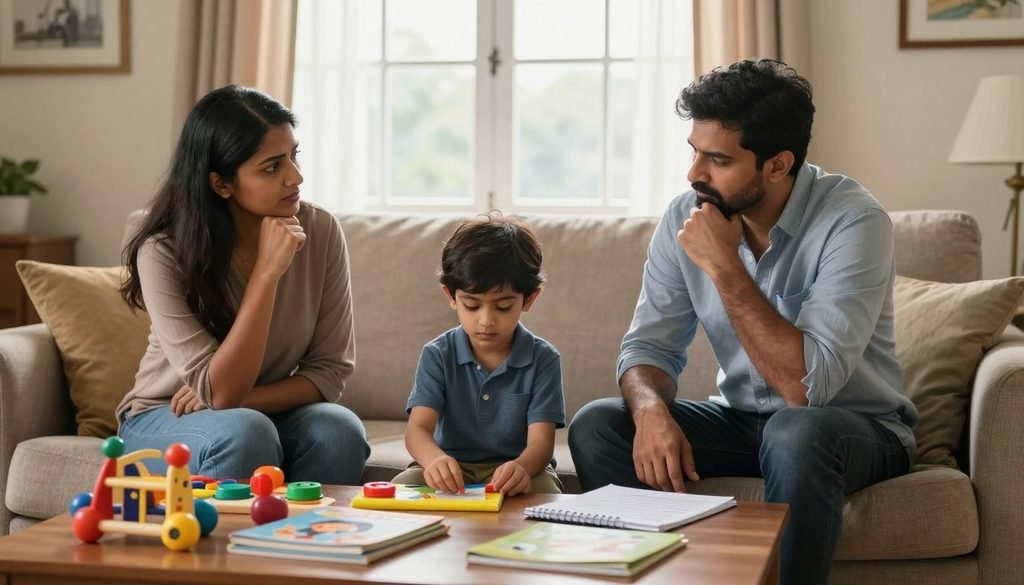
Key Takeaways
- School labels and age cutoffs can vary.
- A birth date is only one part of the decision.
- Developmental readiness can grow with time and support.
- Ask how the school handles settling in and daily routines.
- Compare the program with your child’s needs, not other children.
Here is a practical look at the class, age ranges, readiness, and how to assess a school, beginning with what Pre-KG means.
What Is Pre-KG, and Where Does It Fit?
In India, Pre-KG usually refers to an early learning class before the more structured kindergarten years, but its exact place in a school’s sequence can vary. Schools may use Pre-KG, preschool, playgroup, or nursery differently. The label alone does not tell you what children do or which age group a class serves.
The National Education Policy 2020 places the Foundational Stage from age 3 through age 8. Its first three years cover preschool, followed by two years covering Classes 1 and 2. Preschool attendance is not compulsory in India. Parents can consider it as one option for early education rather than treating enrollment as a national requirement.
Preschool attendance is not compulsory in India, and a class label does not have one standard meaning across schools.
In these early years, schools generally focus on social, language, and broader development. Children learn through conversation, stories, movement, exploration, and play, rather than being expected to master formal academics. The aim is not to make every child read or write before kindergarten.
The term can also mean something different in the United States. “Pre-K” there often refers to a program for 4-year-olds, so families moving between education systems should not assume the names match. A common mistake is treating a class label as a standardized national level. Once parents understand the label, they can compare a child’s age with the school’s actual entry criteria.
Pre-KG Admission in Rajakilpakkam: Age, Readiness and What Parents Should Know
A child close to age 3 may fit the common preschool entry range, but the school’s own cutoff and class naming determine eligibility. Many children begin preschool around age 3, while some programs accept younger children into playgroup. These ranges are indicative, not a guaranteed Pre-KG cutoff.
How Common Preschool Age Bands Compare
The table gives a broad reference for common preschool stages in India. Schools may use different names or set different entry rules, so treat the ages as a starting point for your conversation, not a promise of placement.
| Stage | Indicative age band | What parents should verify |
| Playgroup | 2-2.5 years | Confirm the school’s class naming and cutoff. |
| Nursery | 3-3.5 years | Confirm the school’s class naming and cutoff. |
| LKG | 4-4.5 years | Confirm the school’s class naming and cutoff. |
| UKG | 5-5.5 years | Confirm the school’s class naming and cutoff. |
Parents often ask, “What is the correct age to join pre-KG?” It depends on the school’s entry rule, but many children enter preschool around age 3. The age bands above do not establish a universal admission age for every school in Rajakilpakkam.
Why Readiness Matters Alongside Age
Age, the class label, and developmental readiness are separate considerations. A child can meet an age cutoff and still need more time to feel comfortable in a group. Another child may seem eager to join but fall outside a school’s stated entry rule.
Ask for the school’s exact age calculation date and how it calculates a child’s age on that date. Do not assume there is one universal cutoff, such as March 31 or December 31. The date and rule belong to the individual school, so checking them can prevent confusion about eligibility.
Developmental readiness means a child’s ability to manage the social and practical demands of a class. It is not a pass-or-fail score, and children develop at different rates. After checking the age rule, parents can look at the everyday behaviors that indicate whether a child may be comfortable in a group setting.
Which Communication Signs Suggest a Child Is Ready?
A child who can signal “help,” follow a familiar one-step request, or show what interests them already has useful ways to take part in a preschool day. Speech does not need to be polished for a child to communicate. Children do not need perfect pronunciation or long sentences to participate.
Expressing Needs and Feelings
Notice how your child lets you know about hunger, discomfort, or needing help. Words, short phrases, and clear gestures can all carry a message. A child might point to a cup, bring over a toy that needs fixing, or use a familiar word when something feels wrong.
These communication skills help teachers understand what a child needs during the day. They also help a child express interest or frustration without needing to explain everything in a full sentence. Limited speech should not be confused with a lack of curiosity or an inability to learn.
Understanding Simple Instructions
A child may respond to a familiar one-step request, such as “bring your shoes,” or listen to a short story or activity prompt. Look for an attempt to engage, even if your child needs repetition or time to respond. Interest can show through a gesture, a question, a smile, or moving closer.
Try noticing these four signs during ordinary play and conversation:
- Signals basic needs.
- Responds to a familiar instruction.
- Engages in back-and-forth interaction.
- Shows interest in a story or conversation.
The signs are useful observations, not an admission test. A child may communicate in different ways with familiar adults and in new settings, and confidence can take time to build. If you have concerns about development or communication, discuss them with your child’s pediatrician. Communication is one part of readiness, and the next question is how the child manages separation, peer interaction, and basic self-help.
How Do Social Comfort and Independence Show Readiness?
A child who can recover from a brief goodbye with reassurance may be developing the emotional comfort needed to spend time in a new setting. Some sadness at first is normal; it does not by itself mean a child cannot adjust. Comfort with separation often grows gradually through repeated, supported experiences.

Being Apart From a Parent
Think about how your child responds when staying with a familiar caregiver for a short period. A child might be upset at goodbye, then settle after an adult offers comfort or starts a familiar activity. That pattern can give you a more useful picture than judging only the first moment of separation.
Some children need more support than others, especially in a new environment. A child may be curious about peers and eager to explore while still needing help during drop-off. Those reactions can happen together; interest in other children does not require a child to feel immediately at ease without a parent.
Joining Play and Managing Basic Tasks
Watch how your child approaches other children and shared activities. They may show interest, begin to take turns with reminders, or play beside others before joining them. These small steps can be part of learning interaction, rather than evidence that a child must already share perfectly.
Basic self-help can also be emerging. A child may signal for toilet help, eat with some assistance, or try a simple task such as putting on a shoe. Complete independence, perfect sharing, and full toilet training are not universal readiness measures. Each school sets its own policy, so families should ask what support and independence it expects.
Try not to compare your child’s behavior with a sibling’s or a friend’s child. Their comfort may look different, even when both are making progress. These skills develop through repeated experiences, and the next useful check is whether the child can engage with simple routines and classroom activities.
What Routines and Classroom Skills Help With the Transition?
A familiar hand-washing or tidy-up routine can make a new classroom feel less unpredictable. Children often find it easier to join in when they recognize a few everyday steps. Small practice at home can help without turning preparation into a test.
Practicing Everyday Routines at Home
Invite your child to wash hands before a snack, put away one activity before starting another, and ask for help when needed. Keep the steps simple and show them yourself. A routine does not have to happen perfectly every time to become familiar.
These gentle preparation ideas can make the first days feel more recognizable:
- Visit the school with your child, if visits are available.
- Read a story about starting school together.
- Role-play a teacher-and-child interaction at home.
- Practice a familiar snack or hand-washing routine.
Keep the mood light. If your child loses interest, pause and try another day rather than turning the activity into a lesson they must complete. A child who asks for help or needs a reminder is still learning how to take part.
Taking Part in Short Group Activities
Classroom activities may include listening to a brief story, joining a guided play circle, or moving from one activity to another with adult support. These experiences let children practice listening and shifting attention in a group. They do not require children to sit still for long stretches.
Children’s attention and adjustment vary, so no single number of minutes works as a universal readiness rule. A child may join briefly, step away, then return with encouragement. That is different from being expected to manage every transition alone.
Avoid drilling worksheets or expecting a preschooler to sit still for long periods before enrollment. Those demands do not tell you whether a child will enjoy a classroom. Once parents know what helps a child participate, they can look at the play-based experiences and skills a good early-years program should support.
What Do Children Learn in Pre-KG?
In Pre-KG, a story, a song, or a shared building activity can teach more than a page of drills because children practice several skills while they play. Play-based learning is an approach in which children build skills and understanding through play, hands-on activities, conversation, and exploration. Pre-KG should support development at a child’s stage, not turn learning into a race.
Stories, music, conversation, guided play, and hands-on activities can support language, curiosity, early thinking, creativity, movement, and interaction. For example, children may talk about a story, build with blocks, or sort objects with a teacher. Each activity offers room to explore while practicing more than one skill.
| Learning area | Example activity | Skills practiced |
| Language and communication | Storytelling | Listening and sharing ideas |
| Social-emotional development | Group play | Turn-taking and cooperation |
| Early thinking | Sorting objects | Noticing patterns and comparing |
| Physical coordination | Drawing | Hand control and coordination |
The table offers examples, not a required curriculum. A preschool may use different activities to support similar skills. What matters is that children can take part in meaningful learning and get support as they explore, talk, move, and work with others.
Pre-KG is not expected to be a race to advanced reading, writing, or math. A child who is still learning to hold a crayon or explain an idea can be making useful progress. Compare programs by whether their activities suit children’s developmental stage, rather than by how much formal work appears on a page.
Look for chances to ask questions, try an idea, and return to an activity with guidance. These experiences can build curiosity without making a young child feel that every attempt has a right answer. Knowing the learning approach helps parents move from general expectations to specific questions for a school visit or admission conversation.
What Should Parents Ask Before Applying?
A useful school conversation starts with questions about the child’s actual day, not just the name of the curriculum. Practical details help you judge whether a school’s routines and support match your family. Ask how teachers help a child who needs extra time to settle, not only what the brochure promises.
Questions About Age, Learning, and Support
Start with the entry rules and what happens once children arrive. Ask for the exact age cutoff date and how the school defines Pre-KG. Find out what learning approach teachers use, how they support children who need time to settle, and how parents receive updates about the child’s experience.
Listen for clear, specific answers. A school should be able to explain what a typical activity looks like and how a teacher responds when a child needs help. Choosing from a brochure alone can leave you without a clear picture of daily support.
Questions About the Daily Experience and Admission
These questions can help you compare the everyday experience and practical requirements:
- What does a typical day look like?
- How are drop-offs handled?
- What documents are required?
- Is mid-year entry possible, and are seats available?
- What costs or add-ons apply for the chosen hours, transport, or care?
Birth certificates, immunization records, and child photographs may be requested, but the required document list can differ. Ask for the school’s current list before preparing an application. That avoids gathering paperwork that the school does not need or missing an item it does require.
Fees vary according to factors such as hours and transport or care add-ons. Ask which services are included and which cost extra, so you can compare the options on the same terms. Parents can use these questions to evaluate any option, then apply them to the GeeKidss Pre-KG program as a next step.
How Can Parents Explore GeeKidss Pre-KG Support?
Parents considering GeeKidss can begin by checking whether its current Pre-KG entry criteria and daily approach match their child and family. Fit matters alongside eligibility, since a child’s age alone cannot show how comfortable they will feel in a particular setting. Age eligibility does not prove that a program suits a child’s needs.

Check the Program’s Fit for Your Child
Learn about GeeKidss Pre-KG, then confirm the current entry age and cutoff directly with the school. Ask how the school defines the class and what learning approach children experience. These details can help you understand whether the program’s expectations fit your child’s stage.
It is also useful to ask about the daily routine, support during settling in, parent communication, and admission requirements. Focus on the details that matter to your family, such as how your child responds to new adults or changes in routine. A general description cannot tell you exactly how your child will feel in the setting.
When possible, consider how your child reacts during an inquiry or visit. Do they watch, explore, or seek reassurance? A quiet first response does not settle the question, but it gives you something specific to discuss with the school. Ask what teachers do when a child needs more time or comfort.
Take a Clear Next Step
Visit geekidspreschool.com to explore current program and admission information. Use the details there to prepare any questions that remain about eligibility, the learning approach, and the application process. If an inquiry or visit is available, arranging one can help you get a clearer sense of the school’s setting.
Keep your own priorities in view as you learn more. One family may value a certain schedule, while another may focus on communication or settling-in support. Ask for current details directly rather than assuming a feature, fee, cutoff, schedule, or outcome based on a program name.
A school’s age rule can establish eligibility, but your child’s needs and the program’s daily approach help you judge fit.
You can apply the same practical standards to GeeKidss as to any school you are considering. Visit geekidspreschool.com, confirm the current details with GeeKidss, and ask any remaining questions before applying.
Conclusion
A thoughtful Pre-KG decision balances the school’s entry rules with what the child is showing at this stage. Both the cutoff and developmental readiness matter, and children can need different amounts of time to adjust. A later start is not a measure of a child’s ability or potential.
Write down your child’s birth date and a few current strengths or support needs. Then contact a school such as GeeKidss to confirm its cutoff and arrange a conversation or visit. Take that short list of questions to GeeKidss or another school you are considering.
FAQ
What is the correct age to join pre-KG?
Many children begin preschool around age 3, but the correct age for Pre-KG depends on the individual school’s class definition and cutoff date. Some schools use different labels for similar stages, and their age calculations may not match. Ask the school which class it means by Pre-KG and how it calculates age for admission.
What is the age limit for pre-KG in Tamilnadu?
There is no single universal age limit that applies to every Tamil Nadu school. Each school sets its entry policy and age calculation date, and class labels can differ between schools. Ask the specific school for its current cutoff, how it calculates a child’s age on that date, and which class it recommends for your child.
Is 2.5 years too early for Pre-KG?
Not always, but some centers accept children around 2.5 years old into playgroup rather than Pre-KG. Check how the school defines its classes, what cutoff it uses, and whether your child seems comfortable separating from you for a while. Age eligibility alone does not show how ready a child may feel in a new setting.
Is 4 years too late to start preschool?
No. Children can start preschool at 4 and adjust well, since there is no single start age that suits every child. Ask the school which class placement fits your child’s age and experience. If the school recommends a class beyond its preschool stage, discuss what the day involves and whether the transition feels appropriate for your child.
Does a child need to be fully toilet trained before Pre-KG?
Requirements differ by school, so full toilet training is not a universal Pre-KG rule. Ask how much toilet independence teachers expect and whether they can help with occasional accidents. It is useful to describe what your child can do now, including how they signal for help, so the school can explain whether its policy fits your family.
Can a child join Pre-KG in the middle of the school year?
Mid-year entry may be possible if the school allows it and has an available seat. Both conditions matter, so ask about its current policy and availability before planning a start date. You can also discuss how the school helps a child join routines after the year has begun and whether there is a suitable class placement.



Comments are closed