


Introduction
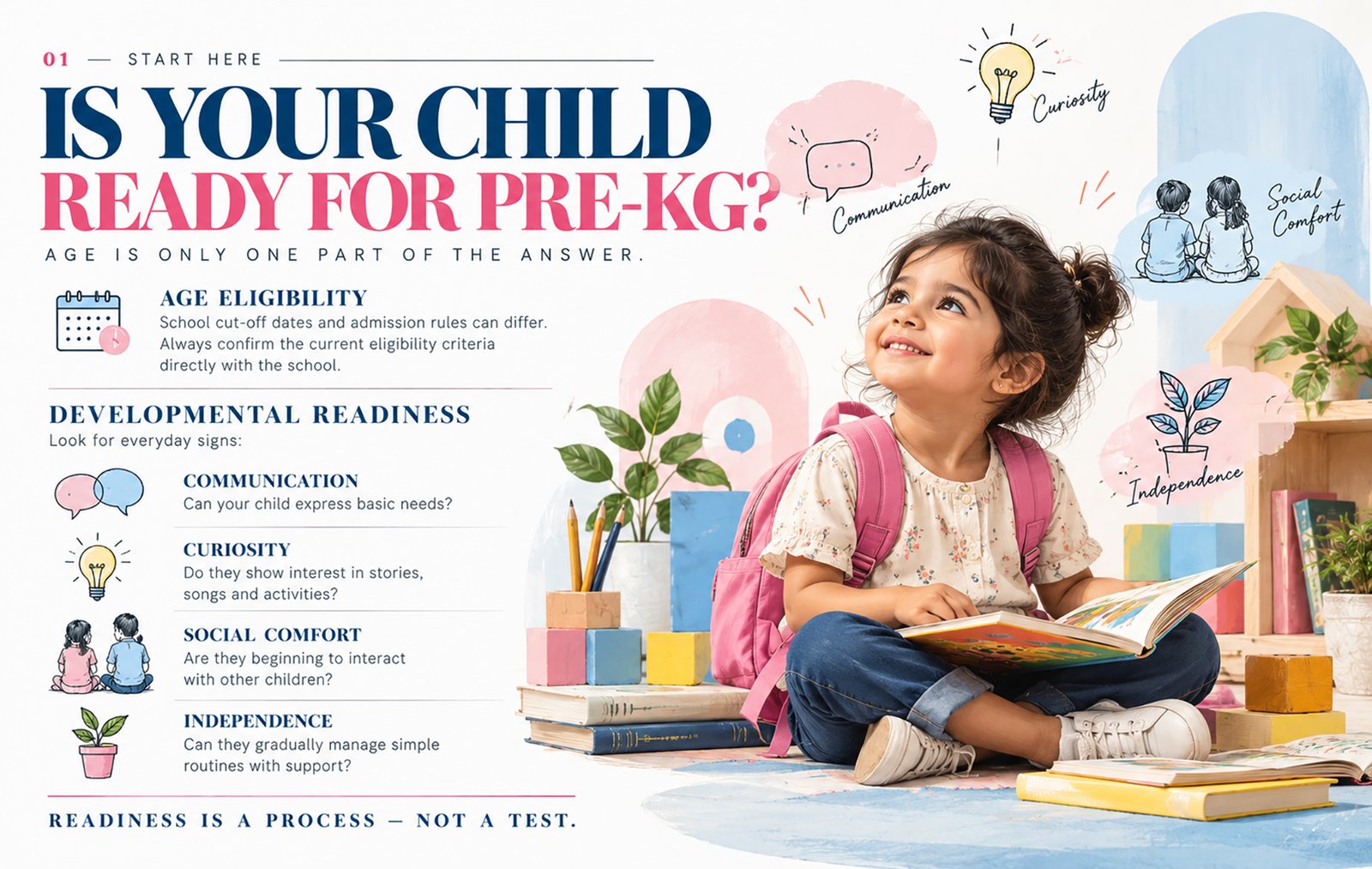
Age requirements and admission procedures can vary by school and academic year. Always confirm the current eligibility criteria directly with the preschool you are considering. Alongside age, think about your child’s communication, independence, interest in other children and ability to manage a new routine. Readiness is not a test that children must pass; it is a broad picture of how they may respond to the next stage.
What Is Pre-KG?
Pre-KG, sometimes described as pre-kindergarten or an early-years programme, introduces young children to a classroom routine through play, stories, music, movement, creative activities and interaction with peers. The focus is generally on foundational development rather than formal academic performance.
Children may practise listening, expressing needs, recognising patterns, exploring colours and shapes, handling books, using simple classroom materials and participating in group activities. They also begin learning everyday social skills such as waiting for a turn, asking for help and caring for shared resources.
A well-planned Pre-KG programme recognises that children learn at different speeds. It offers a range of activities and supports children as they become familiar with routines, teachers and classmates.
Pre-KG is often a child’s first structured experience outside the home. For parents exploring Pre-KG admission in Rajakilpakkam, the process can bring practical questions: What age should a child be? Is my child ready? Which documents are needed? How can we choose a suitable school? Understanding these points can make admission less stressful and help you focus on what matters most—your child’s comfort, development and early learning.
Understanding Age Eligibility
Age is an important part of Pre-KG admission in Rajakilpakkam, but parents should not rely on informal advice or assume that every school uses the same cut-off date. Admission policies may differ according to the institution, programme and applicable education guidelines. Ask the school for the minimum and maximum age, the date used to calculate age and the academic year for which the criteria apply
When contacting a preschool, request the eligibility information in writing if possible. If your child’s birthday falls close to the cut-off date, explain the date of birth and ask the admissions team to confirm eligibility before you make plans. Do not assume that an exception will be granted unless the school confirms it.
Age eligibility and developmental readiness are related but not identical. Two children of the same age may have different experiences, confidence levels and skills. The school can explain its formal admission rule, while parents can consider whether the programme’s routine is appropriate for their child.
How to Recognise Developmental Readiness
Readiness is not about being able to read, write or count before entering Pre-KG. It is more helpful to consider a range of everyday behaviours. Can your child communicate basic needs through words, gestures or another familiar method? Can they show interest in a story, song or simple activity for a short period? Are they beginning to explore toys and materials with curiosity?
Social and emotional readiness may include gradually becoming comfortable with adults outside the family, showing interest in other children or recovering with support after becoming upset. Independence can include attempting to eat, wash hands, put away toys or manage simple belongings, with help when needed.
These abilities develop over time, and children do not need to demonstrate every skill perfectly before starting school. Ask the preschool how it supports children who are still learning these routines. If you have specific developmental concerns, discuss them with a qualified child-development or healthcare professional rather than relying on comparisons with other children.
Preparing for Separation and a New Routine
One of the biggest changes for a child starting Pre-KG is spending time away from familiar caregivers. Some children are excited immediately; others need a gradual transition. Both responses can be normal. Before the first day, talk about school in simple, positive language. Explain that the teacher will help and that you will return at the agreed time.
Practise parts of the morning routine in advance. Set a consistent wake-up time, allow enough time for breakfast and getting dressed, and involve your child in preparing a school bag. Reading picture books about starting school can help children talk about their feelings. If the preschool arranges an orientation visit, attend and let your child explore the space.
At drop-off, keep the goodbye warm and predictable. Long, uncertain departures may make the transition more confusing. Follow the school’s settling-in policy and communicate with the teacher if distress continues. Give your child time to adjust instead of expecting instant enthusiasm.
Questions to Ask During the Admission Process
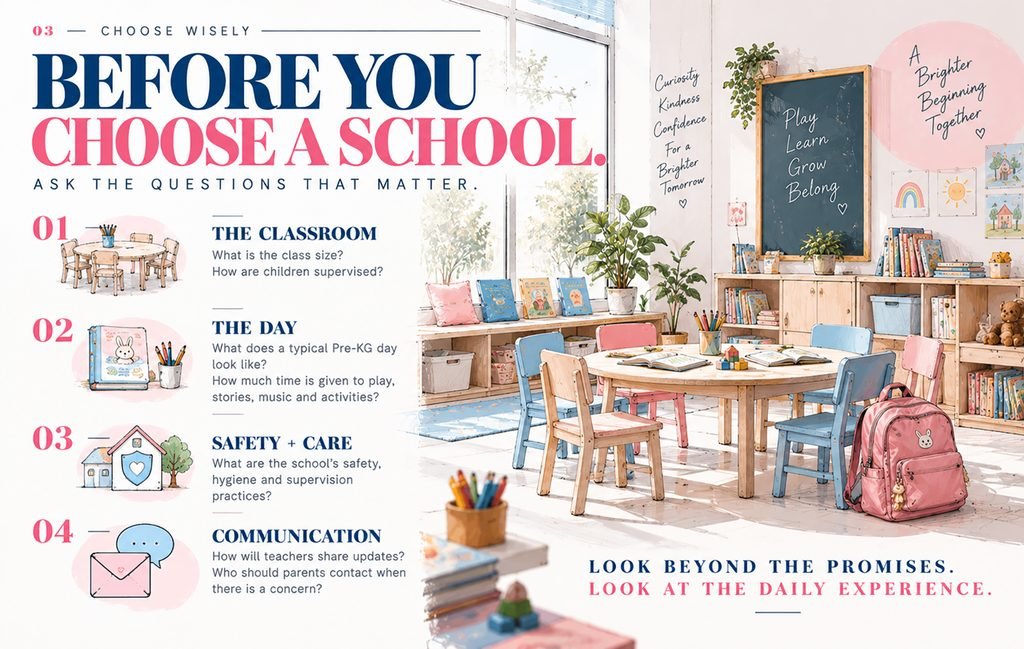
Before applying, ask how the school structures its Pre-KG day and how teachers support children who are new to group settings. Find out the class size, teacher-to-child arrangements, staff training, safety procedures, hygiene practices and supervision during indoor and outdoor activities.
Ask what the curriculum includes and how much time children spend on play, stories, movement, music, art and practical activities. Request a sample daily schedule. Clarify school timings, holidays, late pick-up procedures, transport options and how absences are reported.
Parents should also understand the communication process. How will teachers share updates? Whom should parents contact with a concern? How are accidents, illness or behaviour issues handled? A school that answers questions clearly helps families begin the relationship with realistic expectations.
Documents and Admission Details
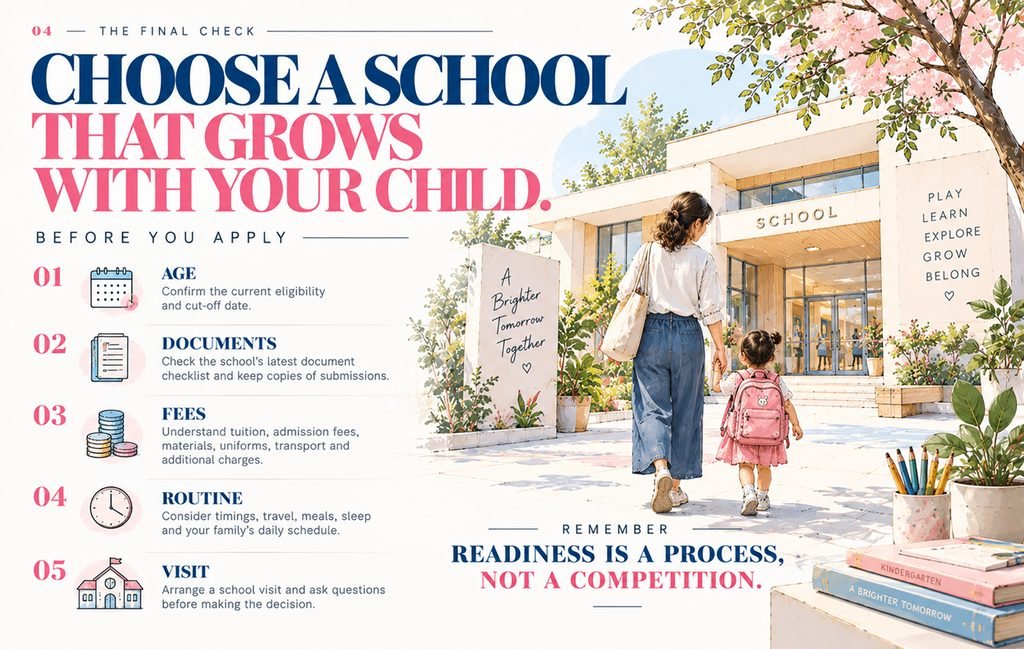
The documents required for Pre-KG admission can vary, so obtain the school’s current checklist rather than preparing based on assumptions. Schools commonly ask for a birth certificate or another accepted proof of date of birth, parent or guardian contact details, address information and recent photographs. Some may request additional forms or health-related information.
Check the spelling of your child’s name and the date of birth across documents before submitting them. Keep copies of forms and payment receipts, and note any deadlines for application, interaction sessions or fee payment. Ask whether originals must be shown for verification and when they will be returned.
Do not share sensitive documents through unofficial channels. Use the school’s approved submission method and confirm that you have received an acknowledgement. If you are unsure about a document, ask the admissions office to explain the requirement.
Fees, Timings and Practical Planning
When comparing Pre-KG admission options in Rajakilpakkam, review the full cost instead of looking only at the advertised tuition. Ask about application or admission fees, term fees, learning materials, uniforms, activity charges, transport and any optional services. Clarify the payment schedule, late-payment policy and refund terms.
Consider whether the school timings work with your family’s routine. Travel time, traffic, work commitments, meals and sleep can affect how comfortably a child adapts. If transport is available, ask how children are supervised and how pick-up and drop-off are verified.
A sustainable arrangement is more useful than choosing a programme that creates daily pressure. Parents should feel able to meet the schedule and stay in communication with the school.
Supporting Early Learning at Home
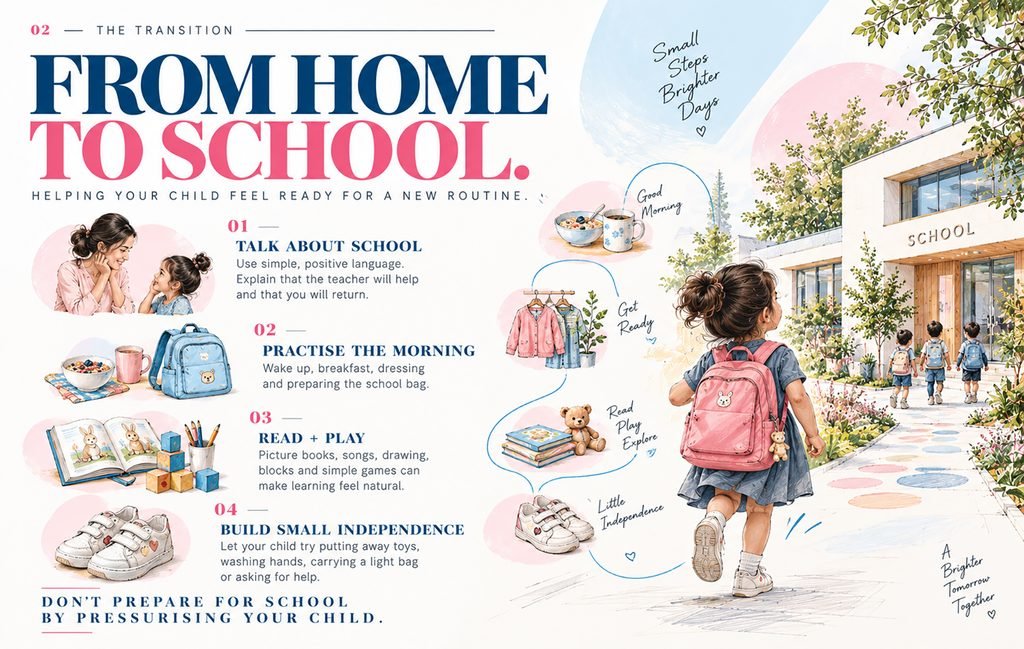
Families can prepare children for Pre-KG through ordinary everyday experiences. Talk together during meals, walks and play. Name objects, describe what you see and give your child time to respond. Read picture books, sing familiar songs, draw, build with blocks and play simple matching or sorting games.
Encourage self-help skills gently. Let your child try putting away toys, carrying a light bag, washing hands or asking for help. These small tasks build confidence and familiarity with routines. Praise effort and curiosity rather than expecting every activity to be completed perfectly.
Avoid turning preparation into formal coaching. Young children need sleep, movement, free play and relaxed time with family. There is no need to pressure a child to memorise letters or numbers just to impress an admissions team. Ask the school what skills are helpful and focus on age-appropriate practice.
Common Admission Mistakes to Avoid
A common mistake is choosing a school based only on a friend’s recommendation or social media photographs. Recommendations can help create a shortlist, but every family should visit and ask questions. Another mistake is assuming the age criteria are identical across schools. Confirm the current cut-off date before applying.
Parents may also underestimate the importance of emotional adjustment. A child who cries during the first few days is not necessarily unready, and a child who seems confident at home may still need support in a classroom. Keep communication open and work with teachers on a consistent transition plan.
Finally, avoid making a decision based solely on early academic claims. Look for a balanced programme that values safety, relationships, play and development. The quality of daily interactions matters more than impressive promises.
Conclusion:
Make an Informed Pre-KG Choice
The Pre-KG admission process becomes easier when parents understand age eligibility, developmental readiness, documents, fees and the school’s daily approach. If you are exploring Pre-KG admission in Rajakilpakkam, start early, shortlist schools, arrange visits and ask for current policies directly from each admissions team
Remember that readiness is a process, not a competition. Your child does not need to know everything before the first day. A supportive preschool will help them become familiar with routines, make connections and develop new skills over time. Choose a school that communicates clearly, treats children with care and works in partnership with families.
Comments are closed